An Olla pot is an unglazed clay pot used to hold water for irrigation purposes. It is buried underneath the soil and the pot is filled with water. Water will slowly release to the soil with plant roots directing themselves towards the water. Because the water is released directly to plant roots, it is considered a water saving and efficient way to irrigate your garden. After testing out Olla pots for two years, I simply love gardening with these pots in our Southern California heat and drought.

The effectiveness of these pots cannot be overpraised.
(1) I find that I am spending less time watering my garden. I simply remove the lid and fill the pots with water. This means I don’t use too much water as I am only filling up to the container fullness. As I use a bucket to fill the pots, any water left in the bucket after filling a pot, goes to the next pot. Refilling happens about 3-4 days (even during a heat wave).
(2) The water is used efficiently. Plant roots needs water. With water slowly seeping through the porous clay, the roots direct themselves towards the water. Roots don’t need to wait for the water to come to them during top soil watering. The soil will already be slightly moist through seepage from the clay and draw water when it’s thirsty. The water keeps the soil cool and during hot days, you will notice your plants not wilt because they are keeping cool and watered.
(3) I can fill up the olla pots using the water from my rain barrels. If I am using a drip irrigation system, I would have to retrofit something to the rainwater barrel and have the correct pressure to release the water. With the Olla, I just fill up my barrel with rainwater and pour.
(4) I can go away for several days and not have to worry if my plants need to be watered or place the burden on hired help. I can be confident that for the next 3-4 days my plants will be watered.
(5) Fewer pests and weeds. Because there is no overhead watering onto plant leaves, there is fewer chance of the water accumulating onto the leaves and the plant catching fungus or for a pest to dwell and thrive.
(6) Plants love it. I haven’t come across a plant that doesn’t seem to love this type of watering but I know certain plants absolutely thrive off it. Plants that have roots underground such and beets and fennel do especially well. Plants such as watermelon that requires a lot of water, consistently draw water from the pots. Because of our climate, soil tends to dry out fast and I have failed in trying to grow anything in a standing raised bed. But with the Olla pot, it has kept the soil moist and I have been able to grow a beautiful bed of lettuce.
Olla pots come in different sizes and makers. I use Dripping Springs Ollas due to their wide neck and the excellent craftsmanship and feel of the clay. This particular brand is made in Mexico with clay from Mexico and imported to a company in Dripping Springs, Texas, for distribution. They make two sizes of Olla pots: one large that is for watering about 3-4 feet diameter area and the other small, with a decorative face, for 20″ diameter. Their pots also come with matching lids.
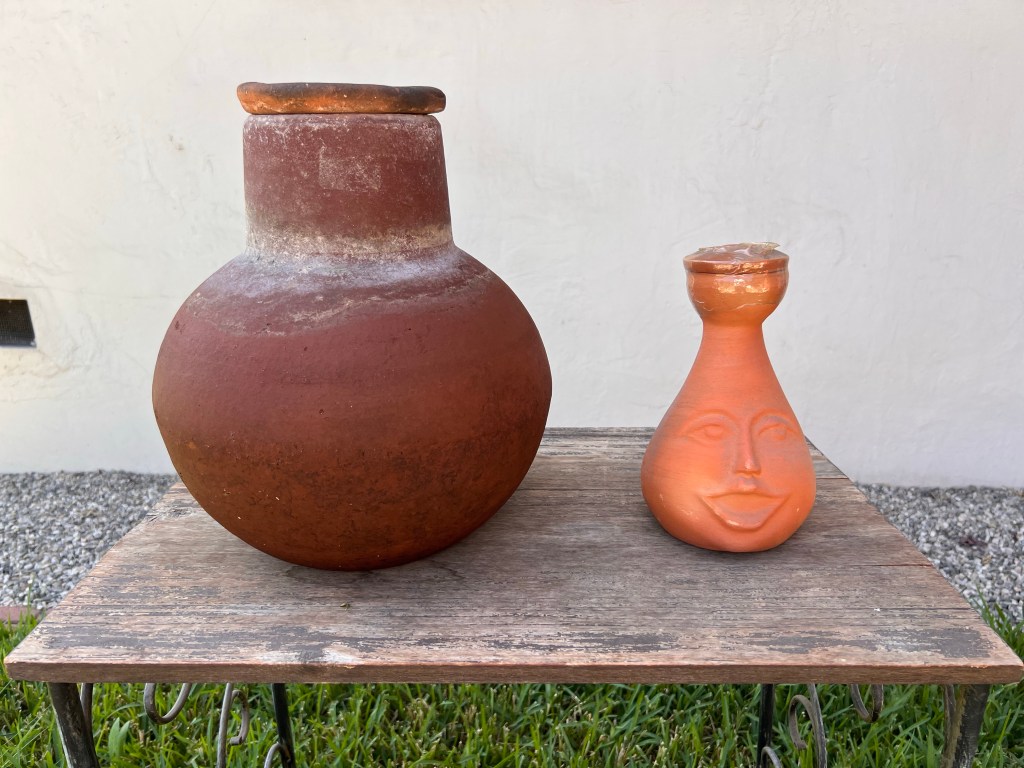
I was fortunate enough to purchase 6 large pots over several months at a local garden store, and recently purchased four small pots. It wasn’t until I realized the efficiency of this watering method that I went back and purchased the small pots for my specific needs (standing raised beds). The next blog will delve into the specific pots and fitting to your garden situations.
About the only thing that is negative about the Olla pot is their cost. I bought mine about 3 years ago and the price has increased quite a bit since then. Finding them may be an issue. While there are online companies, you have to rely on a good shipper that won’t break your pot during delivery.
I have included at the end of this blog a link about olla pots and how to make your own using common terra cotta pots you find in the garden center. Some people have done this and while I have asked how it has gone. I have yet to receive an answer. As a do-it-yourselfer, this appealed to me, but I never attempted it because I was unsure about the type of clay these terra cotta pots consist of. I can tell you that the walls are about half the thickness of the Dripping Springs Ollas. Also, I did not feel confident about glue. While the example recommends gorilla glue and caulking glue, I’m not sure if any hazardous materials may leach into the soil or water. Also, just the fact that over time, it may not hold up being buried in a consistently moist condition. And probably the biggest issue for me is the hole in the pot. Not having a wide mouth to pour water into will take a long time fill a pot and probably discourage or frustrate me while gardening and those are the last things I want to feel when I garden.
For the next blog, I will provide pictures, directions, and tips on how to bury an Olla pot.
Directions on how to make your own Olla pot: https://cdn.shopify.com/s/files/1/0157/0808/files/Olla_Irrigation_69c73b8a-e829-4436-b893-bb2aa0d67a7e.pdf?v=1641935472
 635 Gardening