The abundance of rain and mild weather in 2023 has extended the wildflower season into May and June for Southern California. I scheduled two wildflower viewings: one towards the higher elevation in the Mojave Desert at Rosamond, near Tehachapi and the other at the higher elevation at Big Bear.
Part of the fun and excitement was not knowing what to expect which conversely could lead to a lot of disappointment if there was nothing to be found.
We explored a trail that was on the Pacific Crest Trail (PCT) off Tehachapi-Willow Springs Rd., and Cameron Rd, and after some stumbling around trying to find the trail (some areas are closed or fenced because they are on private property and due to an agreement, should the PCT run through private property, such trails are considered public and open), and we found it by following hikers’ bootprints, the flower search began.
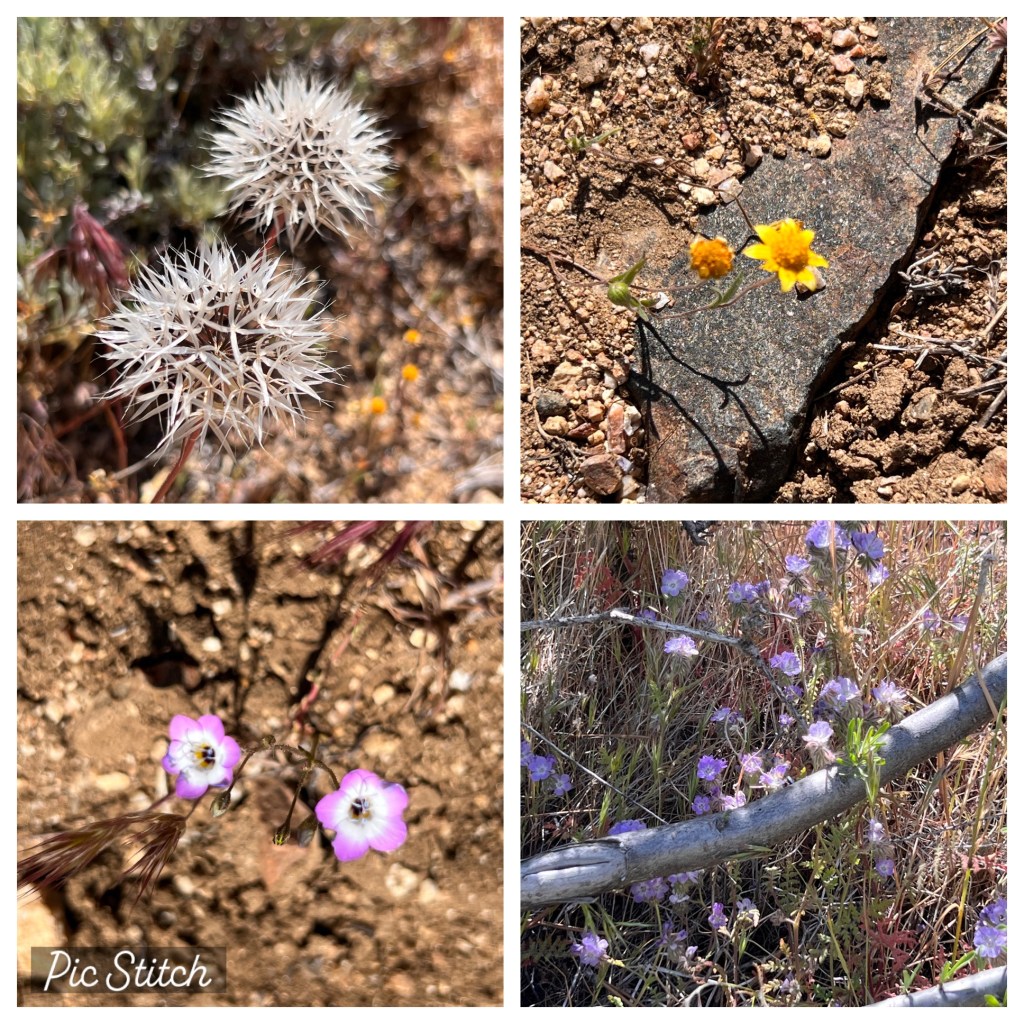
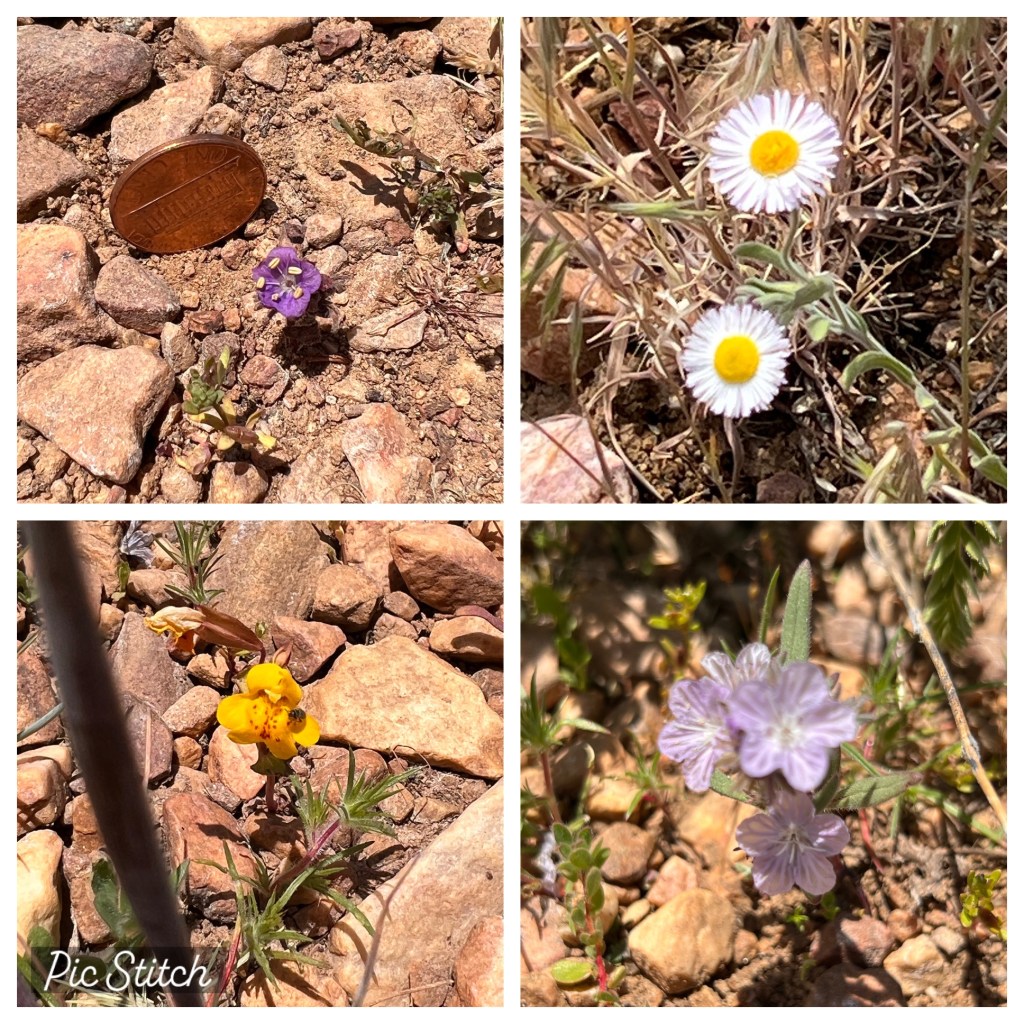
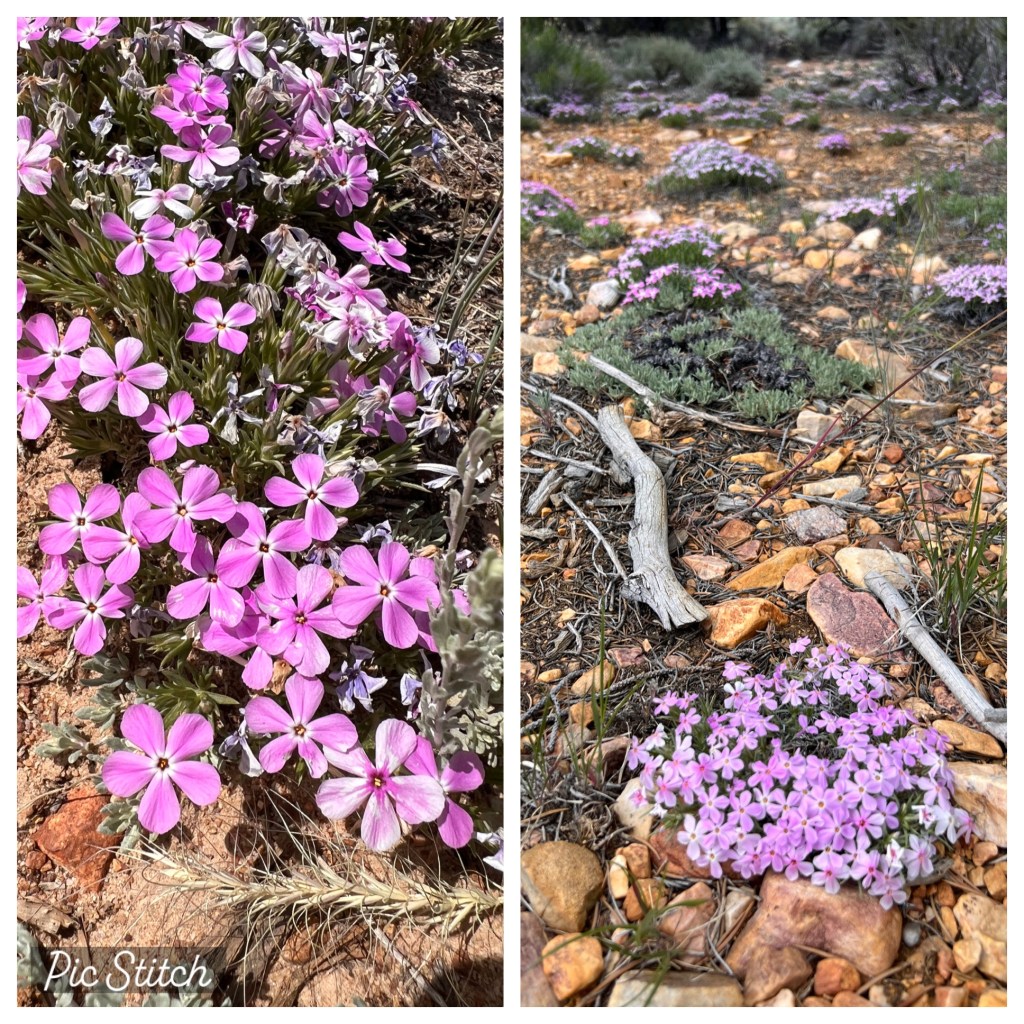
The hike was not difficult but it was narrow and on a slight hill which required more accurate footing. It was quite apparent that the flowers were the ones that were more commonly found on desert grounds: gilia, cilia, phacelia, sandmat, fiddlenecks, popcorn flowers, tidytips, and lupine. While the photos do not depict large masses of wildflowers, I did enjoy the variety and the constant change of flowers.
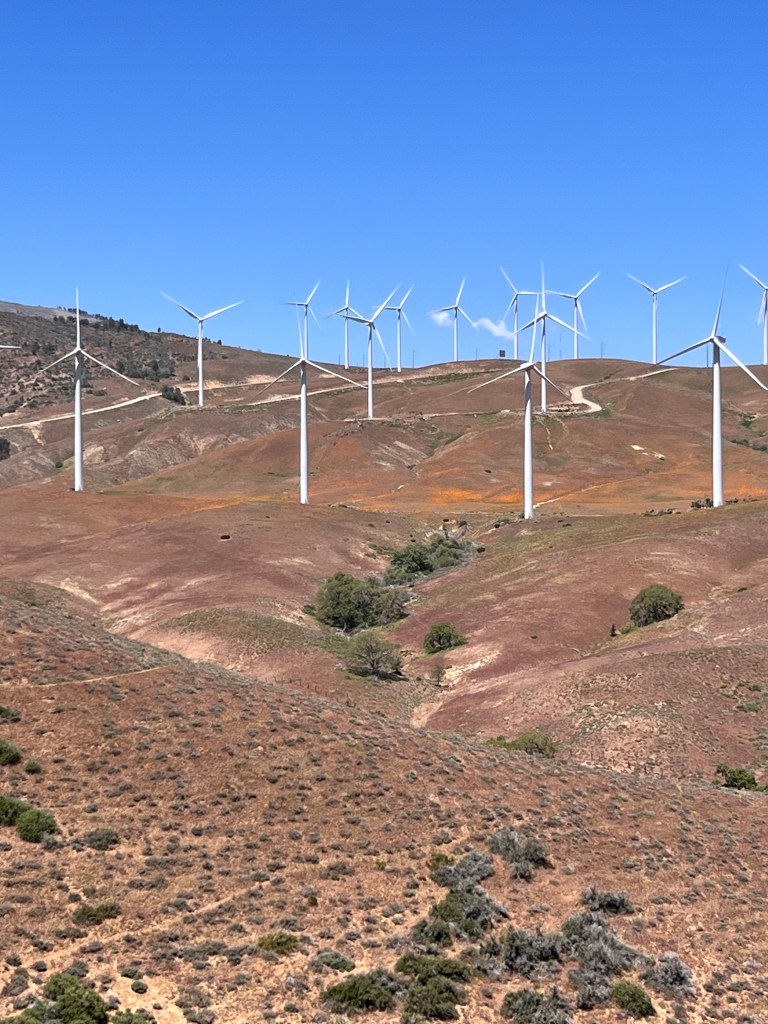
The further we ventured onto the trail, the view of the windmills on hills accompanied by poppies, became more visible. There were spots of poppies that we can see residing on private windmill property.
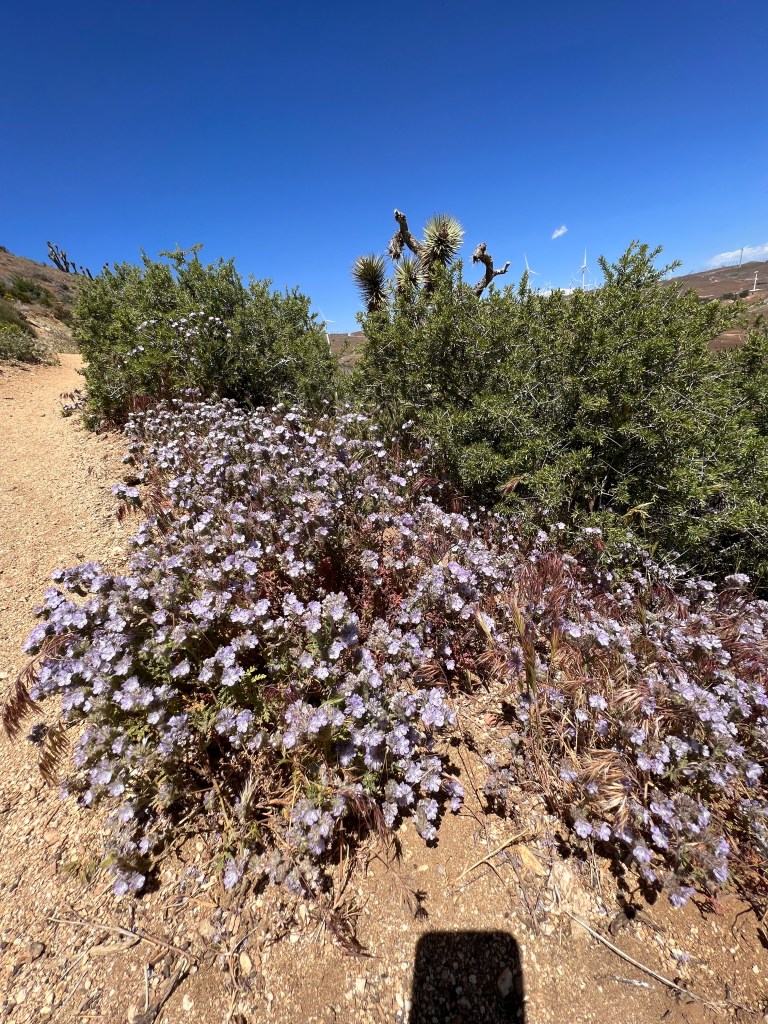
We didn’t walk nearly as long or as far as we wanted to due to the heat and the denser trail but the variety of wildflowers on this section of the PCT was quite impressive.
At the end of May and beginning of June, we visited Big Bear at 6,700 feet. During the drive off the 210 Freeway and entering the 330 Highway, the base of the mountain at the freeway entrance had a lovely bloom of yellow brittle brush and California buckwheat. The sides of the mountains had many clumps of yellow flowering bushes (I could not identify and didn’t stop to take a close up picture). This was one of the prettiest drives I ever had going up to Big Bear.
While there was more than one place we wanted to go for wildflower viewing, one of the trails was closed due to poor road conditions. Again, this was a by product from the heavy rains we received. Our one main location, the Baldwin Lake Ecological Reserve, did not disappoint. Located at 44865, 44999 N Shore Dr, Big Bear, this reserve holds many endemic belly plants of the mountain area. Belly plants are small plants that you need to essentially crawl down to your belly to view.
At the same time, it includes what they call a vernal wet meadow habitat, a wetland that is often located by deciduous trees. While at the reserve, this wetland is located on the left side of the office and behind the restroom structure. The further you walk in, the trail becomes more evident and you begin yet another exploration.
What we found here is the largest mass of lupines I have come across in our travels. The flowers were extremely aromatic.
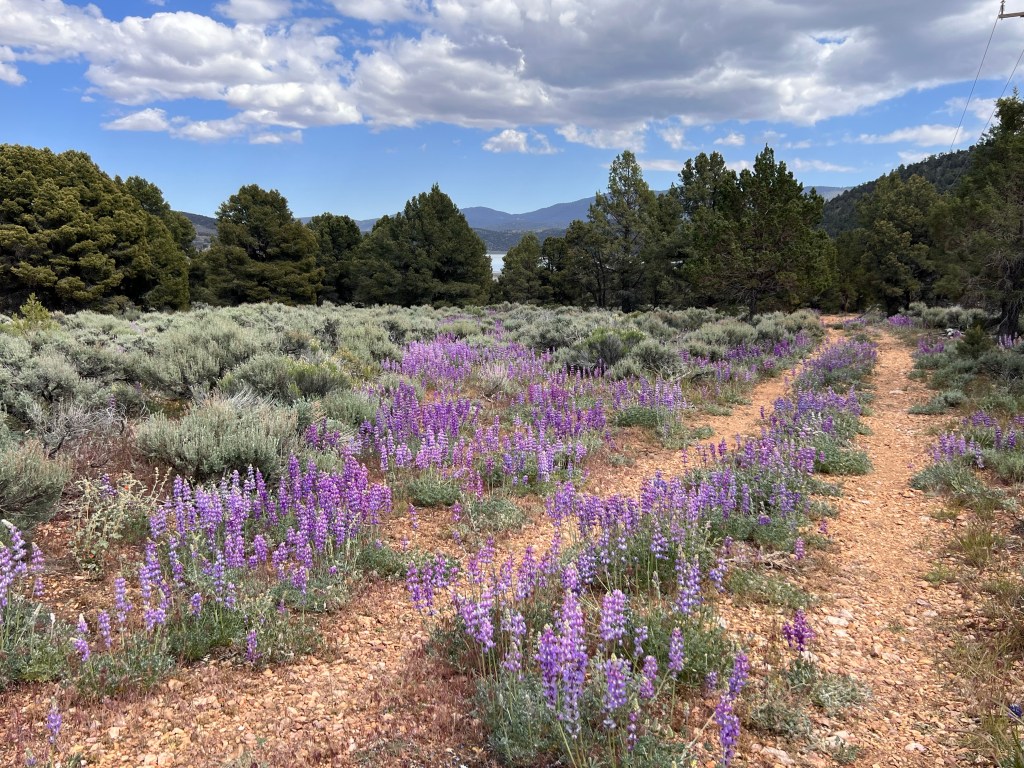
I felt like I came full circle in our wildflower views for 2023. We started our travels by accidentally finding the lupines at Chino Hills State Park at the end of February and we ended it later by accidentally discovering the largest lupine patch at Baldwin Lake Ecological Reserve. While after some of our trips in April started to make me feel nostalgic and even sad over the fleeting wildflowers, experiencing the lupines gave me a sense of appreciation and closure.
I wanted to give a shout out to the amazing parks, reserves, and preserves, that help keep California native and wild. Thanks to the Wildlands Conservancy, the Tejon Ranch Conservancy, Habitat Authority, and California State Parks. And also the various native plant organizations, California Botanic Garden, Theodore Payne Foundation, and the California Native Plant Society.
 635 Gardening