I have been reading a lot about wildlife and pollinators in the garden and I felt the need to include my current experiences as I am having a lot of visitors lately.
I have had this current garden incarnation for seven years. My small backyard garden moved to the side of our house, where the grass was dying from years of drought, and I gained three times the amount of space. Wanting to make things more ornamental as it is visible from the street and to also attract pollinators, I planted some native plants including brittle brush, penstemon, orange mallow, Indian mallow, and electric blue sage. Many of those survived, a few did not.
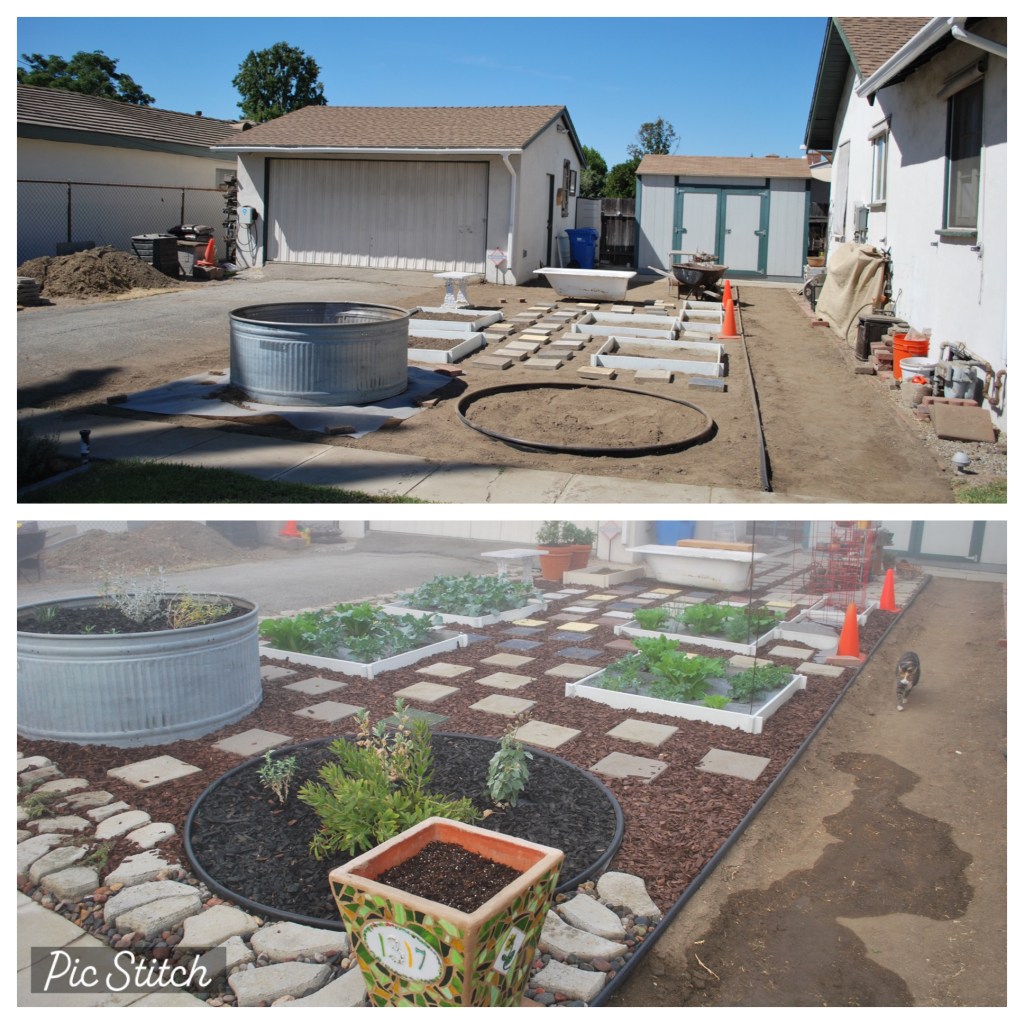
The native plants quickly attracted bees. The penstemon flowers brought the hummingbirds. Then as more grass started to die from our front yard, it became another opportunity to add more raised beds and native plants to extend the garden. This was an opportune area because it received shade from the neighbor’s tree as the main garden baked in full sun.
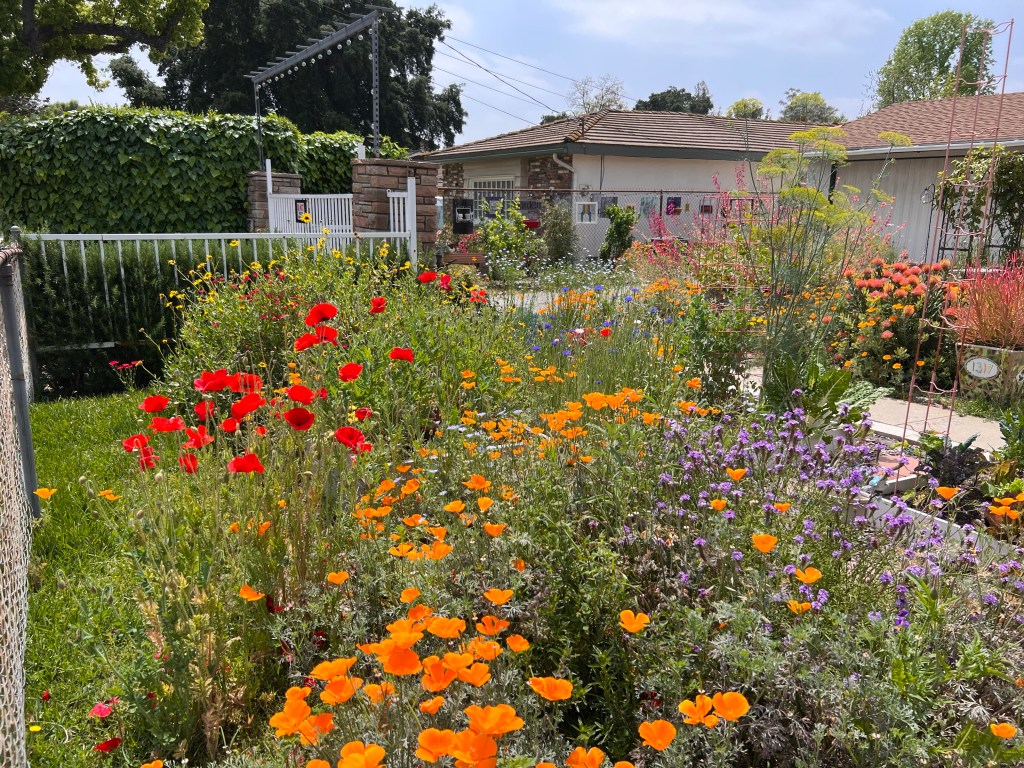
The first few years, I had a “do whatever I felt like doing” mentality and threw down a lot of wildflower seeds. I learned a lot from my overzealous plantings and it was a sight to behold! Soon, I noticed cute little goldfinch birds landing on my bachelor buttons and enjoying the seeds. They loved to poke at sunflower leaves but their song was delightful so they were forgiven for the holes they left behind. I reigned in on the annual wildflower seeds after that but continued to add more native plants such as a native sunflower and verbena.
One morning last year in 2022, as I was doing my usual walk and hanging out with my cats, there was a soft tan critter in my brittle brush. I saw it hop away with its fuzzy cottontail. I was excited for this because it was the first time I had ever seen a rabbit in the suburbs. Opossums are also frequent visitors to my garden. This year, a skunk and raccoon have also visited. They never stay long so I have not yet developed a negative relationship.
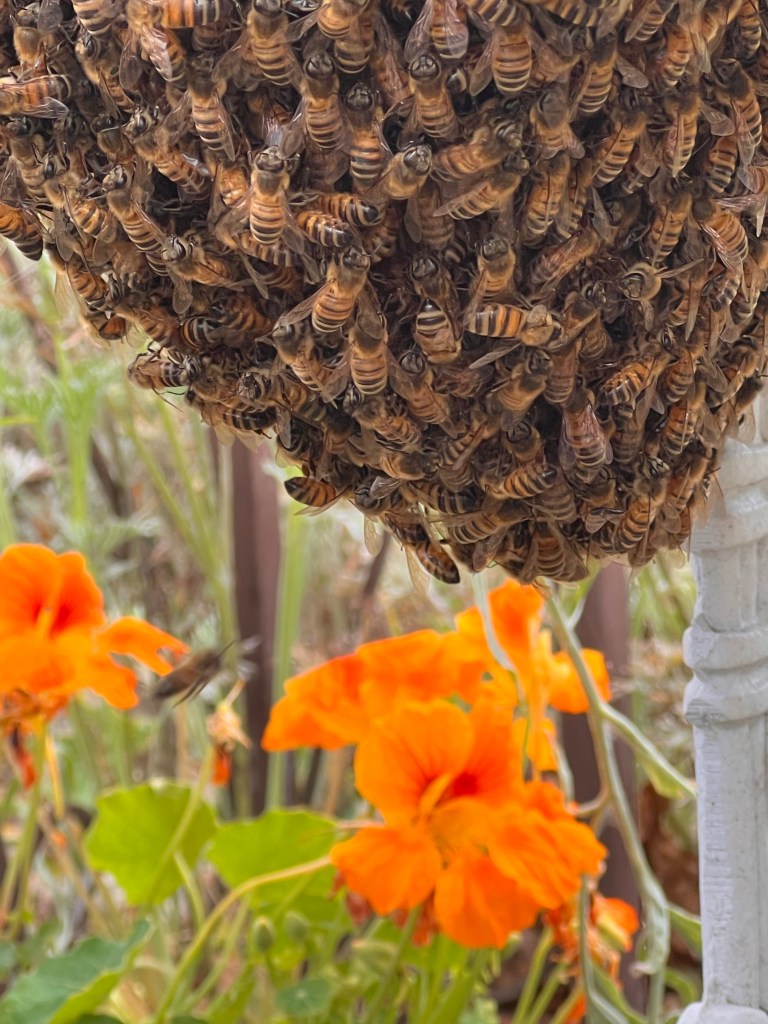
Due to the drought, some of the neighborhood trees suffered and their limbs would break. There is also consistent tree trimming in the neighborhood so it would cause colonizing swarms of bees to find a new home. For the past several years I have been getting yearly bee swarm visits. It is unpredictable what they latch on to: the grapefruit, orange, apple trees, and this year, they just latched onto my garden bench. It’s a visit I enjoy and they stay for about two days until they decide to move on to somewhere more accommodating for their hive building.
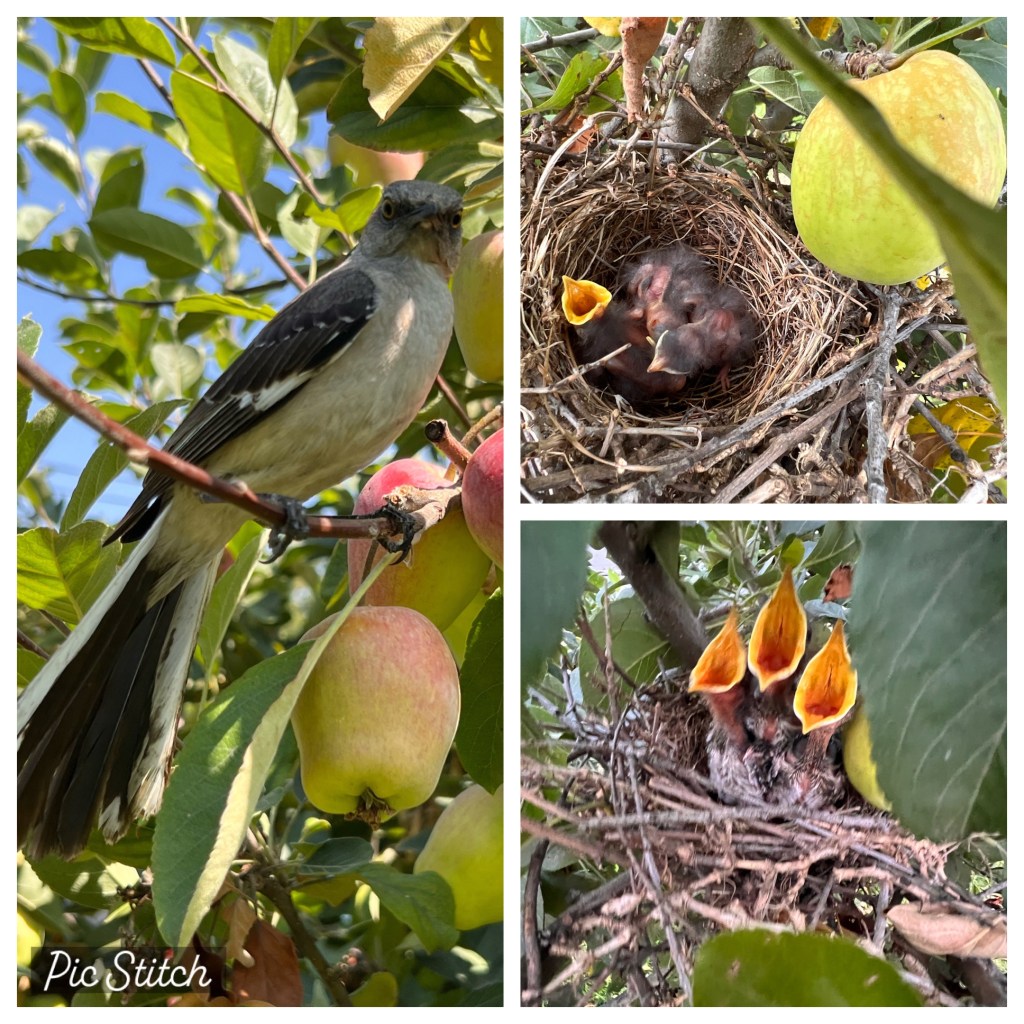
Sometimes I will find a nest in my fruit trees–the most visited tree was my Santa Rosa plum tree. I usually just leave the nest alone when I trim the trees but last year, it fell apart when I trimmed. Luckily, the mockingbirds came and rebuilt their nest in my apple tree which turned out to be fortuitous as they no longer pecked at my plums. The apple tree is just slightly lower so I have been able to take some pictures of the nest and eggs and babies when the parents haven’t been looking.
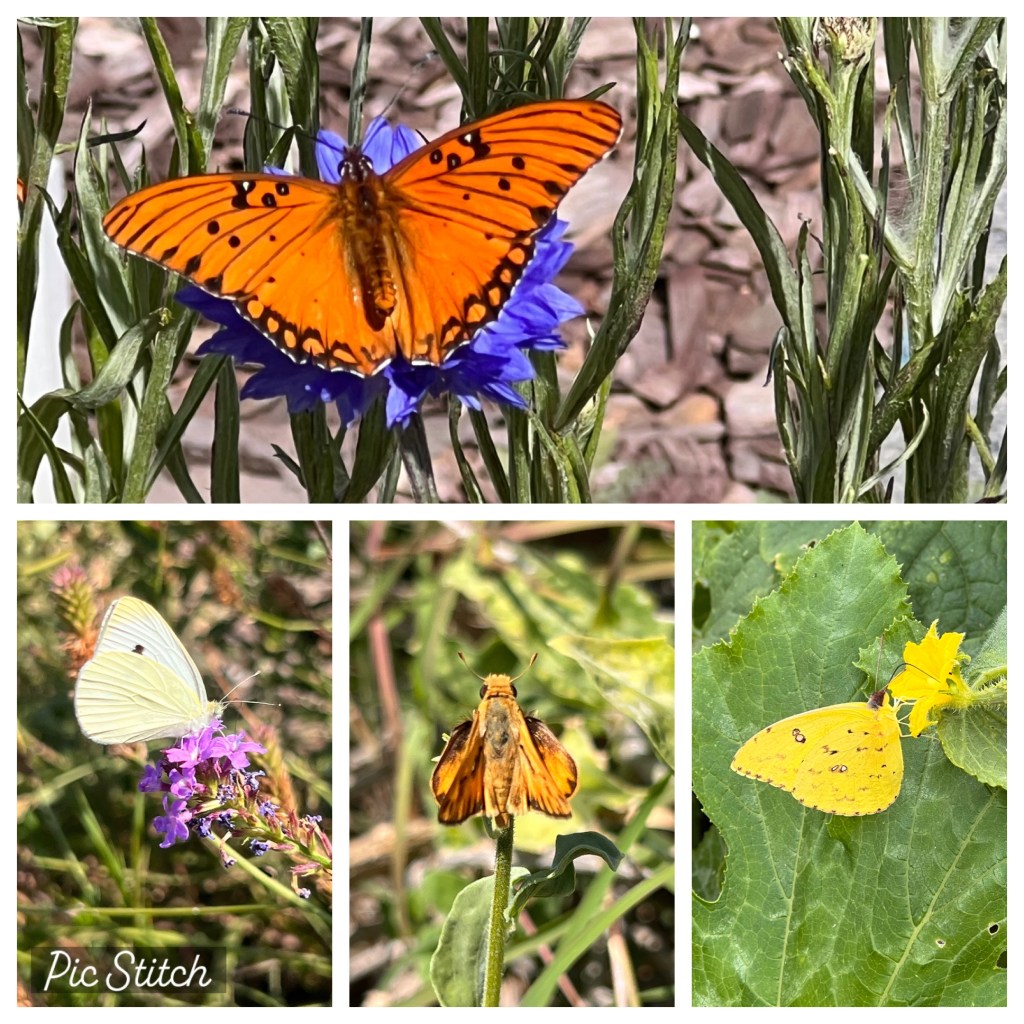
Probably the most significant addition to the garden are the butterflies. I have seen numerous varieties of butterflies including cloud sulfur, cabbage white, skippers, mourning cloak, painted ladies, monarchs, gulf frittery and red admirals.
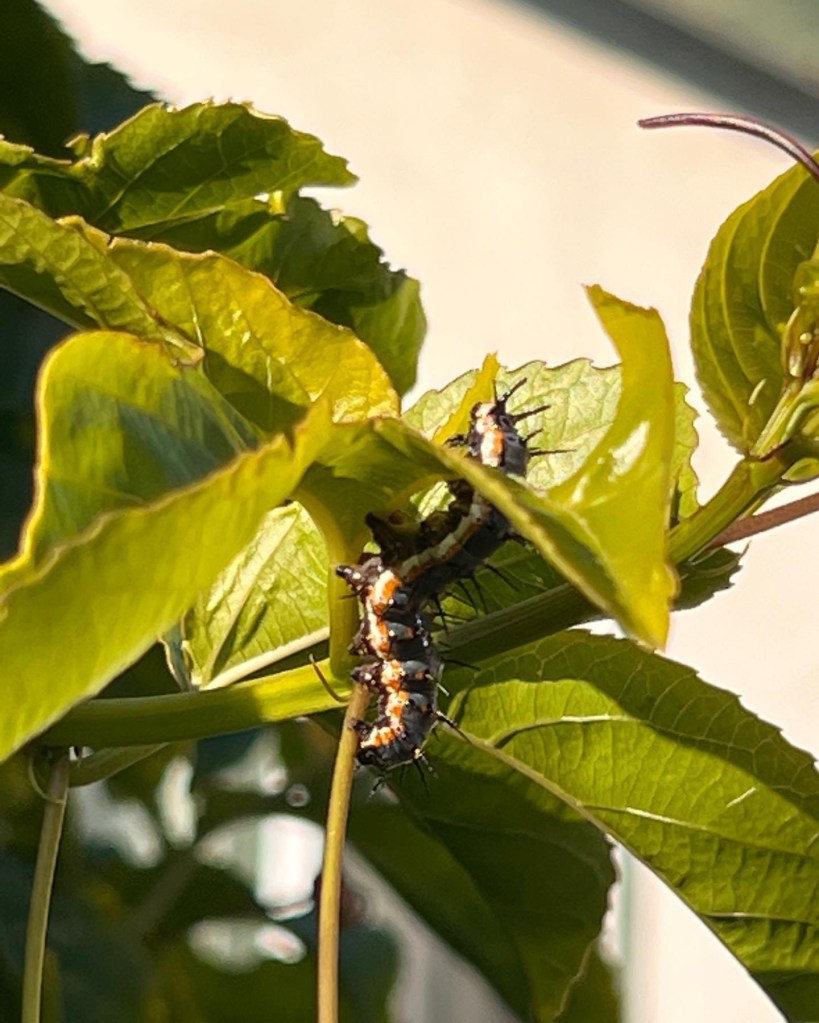
I planted a passion fruit because I enjoy the look of the flowers. Last year, I saw numerous gulf frittery butterfly caterpillars on my passion fruit plant. I spotted several cocoons and numerous butterflies which I can only suppose they emerged from the cocoons hanging from my arch.
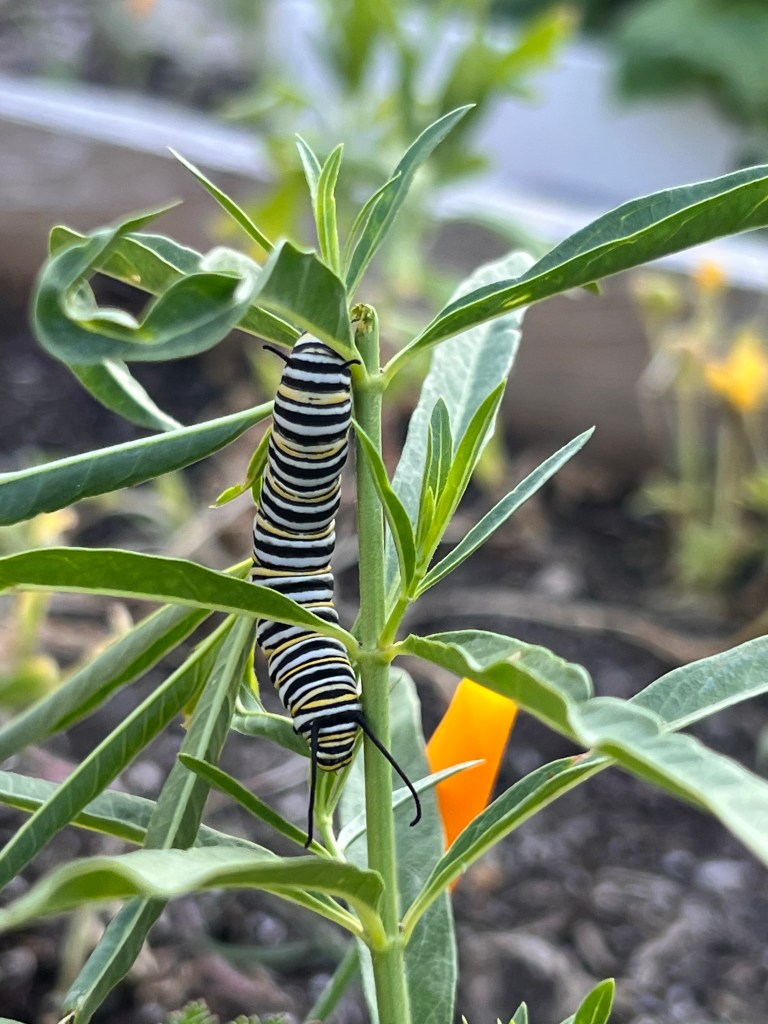
This year, a narrow-leaf milkweed finally grew consistently. Just when the plant seemed to be growing larger, I saw parts of it being nibbled alway. It was delightful to see large fat striped monarch caterpillar twisting its body and eating away. Unfortunately, the weather turned very warm rather quickly and I’m not sure if they were able to survive the heat.
Growing for pollinators has always been my intention for the garden and I will continue to do so, trying to improve and learn from these experiences. But to think, in just a few short years, an organic garden has seen so much diversity of life!
 635 Gardening