Author: Williams, Florence, 2017, W.W. Norton & Company
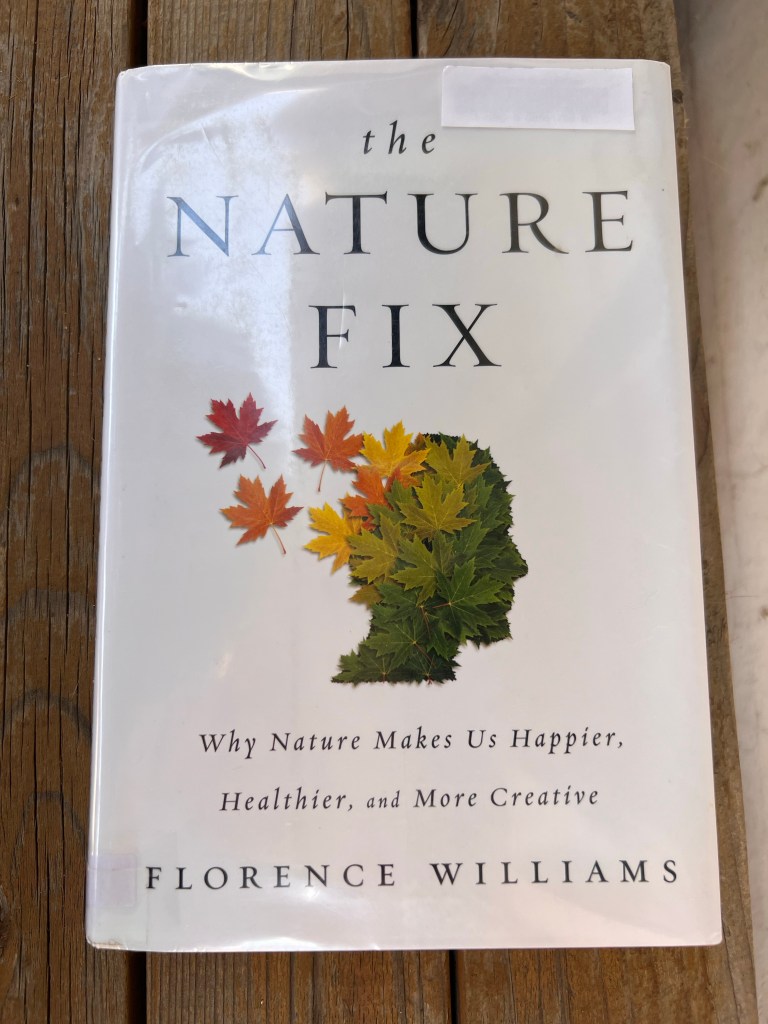
In many of the readings I have come across, the advice is “spend more time in nature,” as a good cure for the blues. Or they say that if you plant a native garden and see wildlife like butterflies flying around, it will make you feel better. Is this true? Is this true for everyone? This claim is widely accepted, usually through personal experiences, but not often tested.
Williams visits countries such as Japan and Korea as they invest and conduct tests in forest bathing to understand this cultural movement and if this is the path for the future for urban cities and people who live in them. In forest bathing, the goal is the utilize all senses from taste, smell, feel, and see. The theory is that our brains respond to natural stimuli, both positive and negative, and an immersion in the forest would be considered a positive experience. The measurements for this test include the taking of the subject’s blood pressure before and after the hike and a response survey.
The issue of noise pollution is addressed. Your personal noise sensitivity can determine the varying amount of stress you feel. The research is to discover if wildlife sounds can help lower your stress level–the thought that meditation is difficult for most people and that being in a quiet room may be sufficient to lower stress. The soothing wildlife sound, not a loud magpie, but a calm, chirping bird could become restorative.
To understand what makes Finland the happiest place on Earth, their lifestyle is analyzed. Many factors are involved, aside from the economic and government assistance they receive, the Finnish engage in nature recreation two to three times a week. Families often have summer cottages where they spend their time playing in the summer and private land is also considered open to the public for people to walk through. Some modern urban conveniences have been creeping into their lives such as people spending more time on their gadgets than exercising. Studies are in place to keep people happy which in turn, is better for their health care system.
The chapter on a group of female veterans who participated in an immersive water rafting trips was the most interesting chapter. The participants discussed their ailments, PTSD, anxiety, and social isolation and how the trip helped. The research suggested that it was the immersive experience: of being far away, involved in a team building exercise, being exhausted at the end of the day, that took them away from their mental issues. For a few of the veterans, the trip did not change their perspective but felt that a more extensive trip may.
While this book has many interesting studies, and the author being a participant on some of the tests, I found her book to be scattered. It felt a little rushed in some places, other places, lacking information. It’s not a surprise that in some of the tests she did not score well as she comes from living in a stressful environment, (Washington D.C.) but the book could have used more interviews with subjects to explain more in depth of how nature was a good fix.
 635 Gardening