From November 16, 2024 to January 5, 2025, at the Los Angeles County Arboreteum, the garden hosted an art exhibit called “Archiving Eden” by Dornith Doherty. There are two parts to the art exhibit: the first is a more standard exhibit of photographs taken by the artist and the second is participatory called “the exchange” where visitors can choose a bag of seeds and exchange it for a photo taken by the artist.
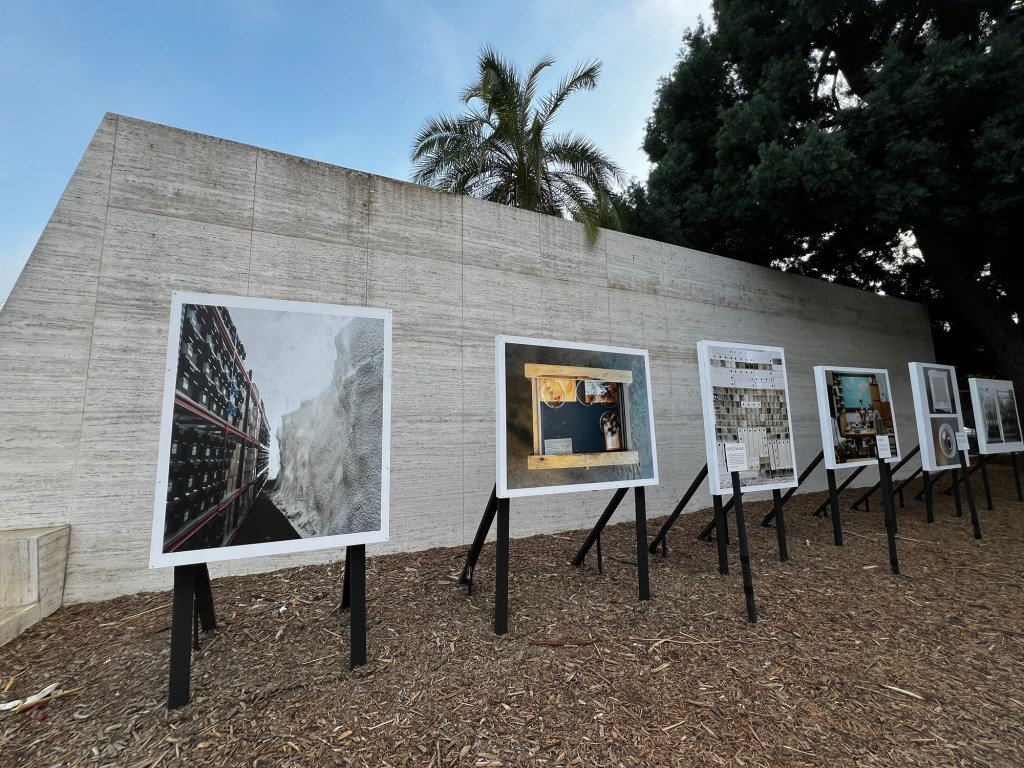
The artist, Dornith Doherty, is concerned with climate change and the loss of biodiversity. Located near the front fountains of the arboretum, her series of photographs exhibited outside and enlarged, are seed banks and vaults. These photos show the inner workings and containers of seed bank vaults from parts of the world including Russia and Norway. She shows bags and boxes of seeds, drawers full of seeds, sifting tools and equipment, and clearly labeled specimens.

The garden felt like a container for her exhibit. With the lush trees and gardens as backdrop, the relationship between contained seeds in her photographs and the source of seeds felt less distanced. The ability to save seeds and have them be transported and saved in a vault in ice was not a far removed notion but tangible, possible, and important.
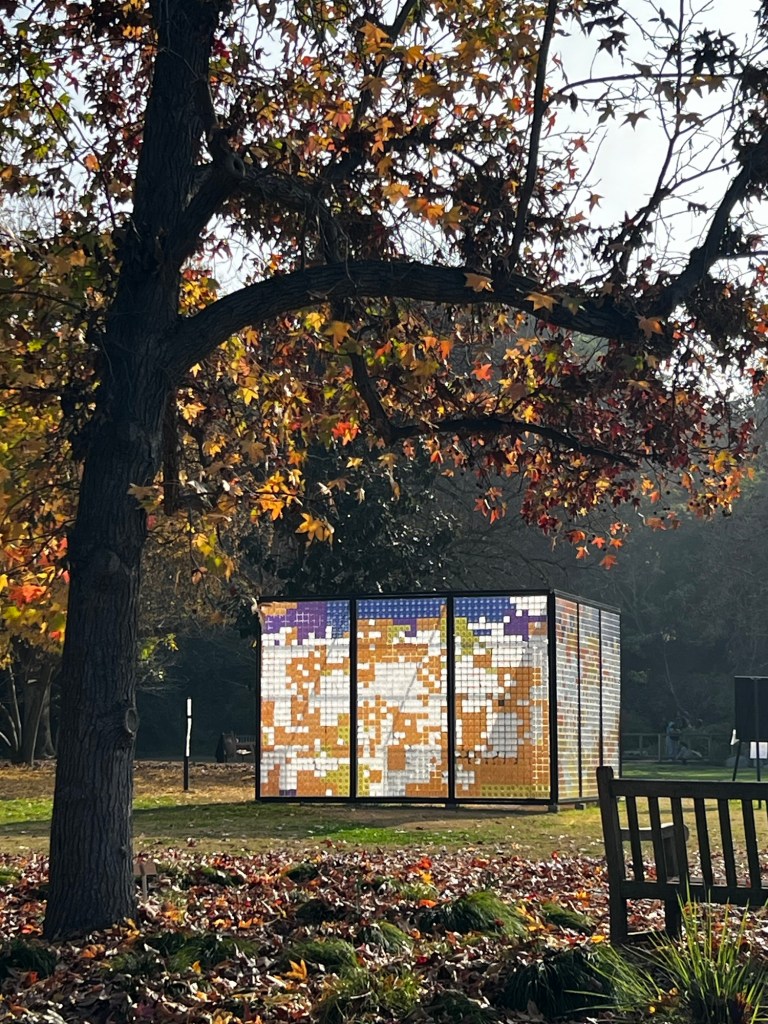
The large art piece, “Archiving Eden: the Exchange,” has been displayed throughout the entire exhibit time. The actual exchange had limited days and hours and is staffed with a volunteer who assists visitors with the process.
The process involves choosing one of six photographs or “tiles” of California native plants: Lasthenia, Owl’s Clover, Sunflower, Arroyo Lupine, California Poppy, and Phacelia, to keep. The volunteer will provide a bag of seed and walk to the other side of the glass and push on the plastic screw of the chosen tile. The plastic screw can be loosened with a fingernail and the tile can be removed and replaced with the bag of seed.

The tile is an x-ray photograph of each type of native plant seed. The participant may keep a piece of the artist’s art. Through the process of reading and identifying six native plants, it is an excellent way to become excited about art and native plants and hopefully, the participant will walk away remembering the name of one native plant. Another aspect to this is the act is to help save a species by adding to the seed bank. While it is probably more common to give away packets of seeds to plant, this was the opposite. A seed was given to save and to be planted by someone else in the future when the need arises.

The initial process was to transfer the exact seed for the exact x-ray tile but the volunteer said it became too chaotic to keep up and the exhibit was adjusted. The volunteer told me that the seed in most of the bags was an Arroyo Lupine as some of the smaller seeds such as the California Poppy was small and the participants were questioning if the bag was empty.

In whichever the case, I felt the exhibit was very successful with its achievement. Participants left with smiles on their faces and asked questions. Perhaps a true indicator of the true purpose of this exhibit, a visitor was taking a picture of her baby holding an x-ray tile. She told me the baby got really excited seeing the exhibit (probably from the pleasing colors) but I thought about how when the baby is grown, s/he look back and ask, what was I holding? A picture of a seed from a native plant that I helped save that day.
 635 Gardening