Location: 1014 W Ventura Blvd, Camarillo, CA 93010
I learned about gardening organically from a magazine subscription called “Organic Gardening” by Rodale Publishing and I read the magazines from cover to cover. The information I learned told me how to be a better gardener and how to plant organically. The magazine ended eventually and they shifted their focus to their experiments.
It was exciting to hear that Rodale had a garden institute where they performed experiments. The thought of a place where people studied and tested ideas on gardening was just mind-blowing for me. I felt comforted knowing that the people that was dispensing information on organic gardening did so through their own trials and experiences. It was always on my bucket list to visit the Rodale Institute on the East Coast. Being on the West Coast, I didn’t think I would be going to visit the institute in Pennsylvania anytime soon. Somehow, the Rodale Institute came to me!
A few years ago, the Rodale Institute found the perfect California location for their satellite location. The historical McGrath Farm in Camarillo, California, is about 50 miles North of Los Angeles in Ventura County. The McGrath Farm had the advantage of being a practicing organic farm and the owner was ready for a change which lead to leasing out spaces who wanted to farm organically.
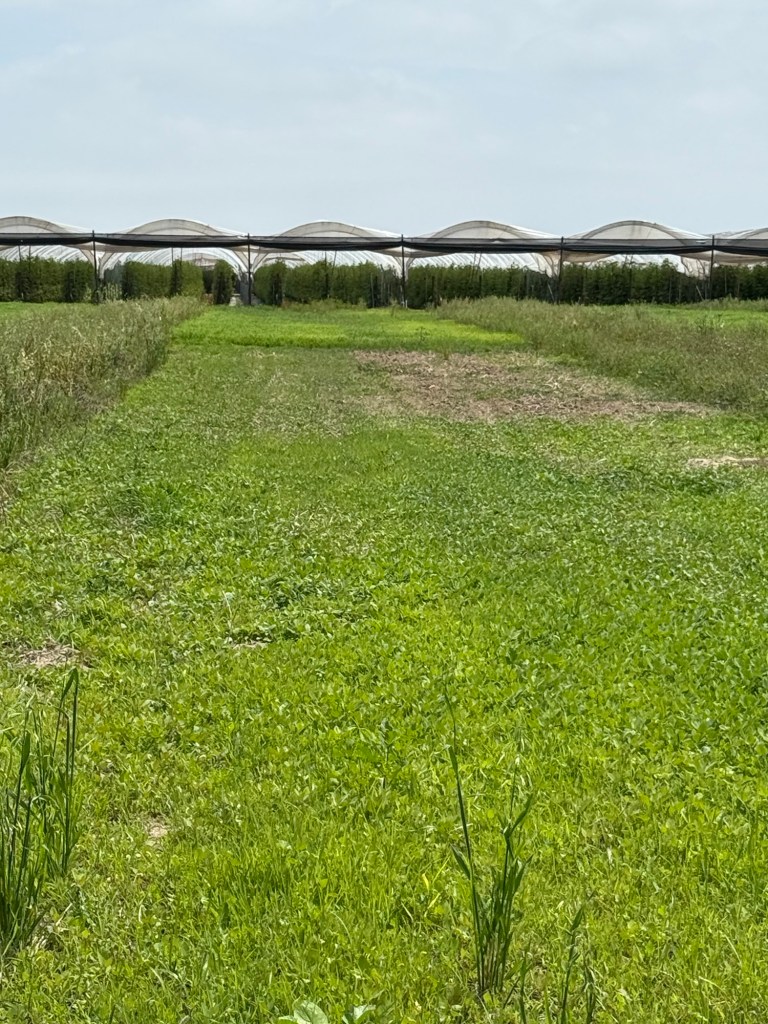
The tarped crop at the back of this picture is a neighboring farm leasing space.
Once a month on every second Friday, from 2-4pm, the California Organic Center offers free tours of their farm. Even if you are only a home gardener, all are welcomed to visit. One of the goals at the farm is to be a source of information hub for farmers who may be interested in gardening organically.
As you tour, your guide will discuss some of the experiments the institute is working on. The current emphasis of their experiments is to improve soil health and to increase microbial activity. Some of the ways to do this is by using cover crops, minimizing tillage, and identifying the cover crops that would work best in California. The scientists are also identifying ways that would benefit the farmer such as weed suppression and timing of cover crops as the cover crops would take away from farm production.
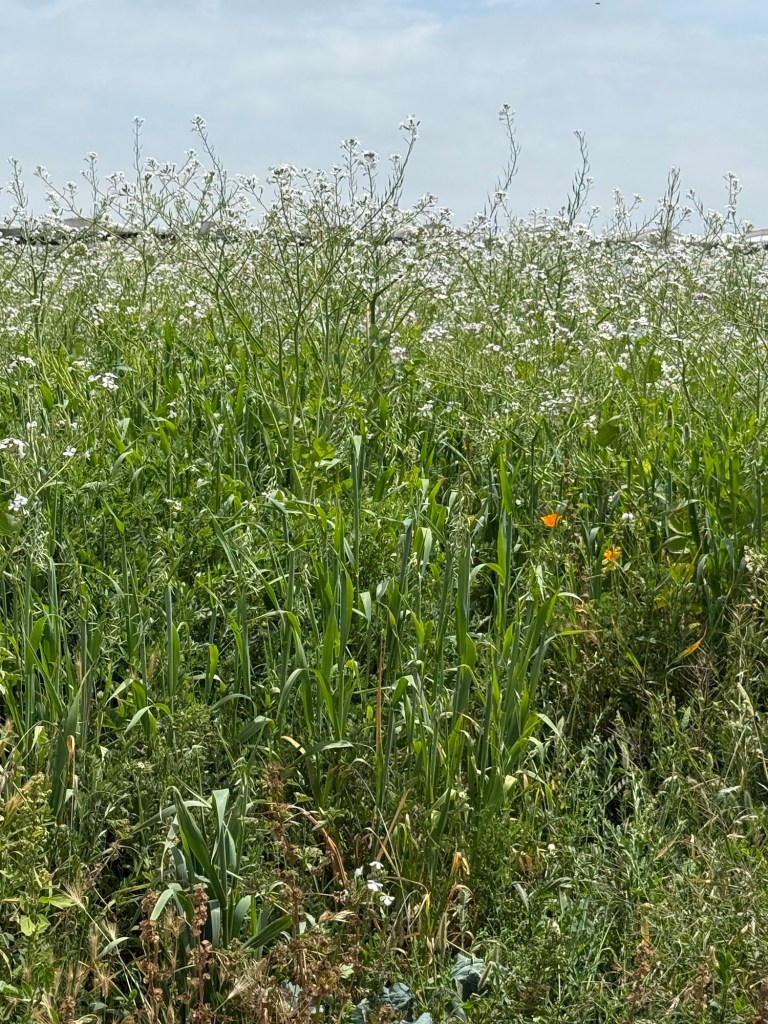
In being able to conduct experiments, the fields are divided into sections where one section will serve as a control with nothing done to it and compared to other sections that may have an experiment such as a cover crop with legumes or one with clover. Other experiments include the use of plastic mulch versus bare soil. Pulling a section of the soil, scientists will measure the microbial activity in the soil, measure the length of roots for that cover crop, and note the amount of weeds.
While the California Institute has only begun their trials a few years ago, they have already found healthy growth with their vegetable plantings using cover crops compared to the soil that did not use any.
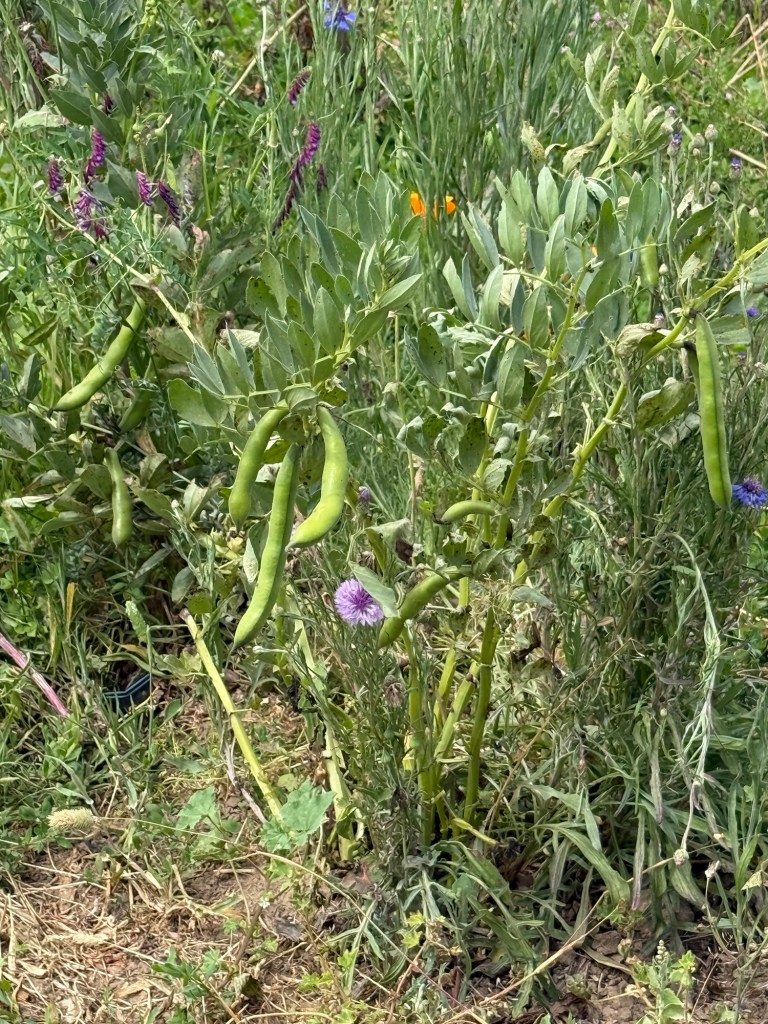
If some of this information sounds familiar to you, you probably have heard of permaculture and regenerative farming. Having these experiments conducted in an agricultural state such as California provides an accessible, tangible opportunity for the scientists to share their information and findings with farmers in the area. California is filled with many small farms and Ventura County maintains a high percentage. The Rodale Institute reports that only about 6 percent of the farmers in Ventura county currently use cover crops.
While I went into this tour not knowing what to expect, it turned out to be exactly as straightforward as outlined in their mission for the site: to conduct experiments, share their field-tested scientific findings, and assist with farmers. I walked away with renewed information for my garden such as crop rotation, cover crops, mulching, and even the pests they contend at their site. As more years pass and more trials conducted, we can look forward to more useful information as we garden organically.
(All pictures are from my visit in May 2025. )
Sign up at their website for tours and other events: https://rodaleinstitute.org/about/facilities-and-campuses/regional-resource-centers/rodale-institute-california-organic-center/.
 635 Gardening