EVENT: September 12, 13, and 14, 2023 at Ventura Fairgrounds, Ventura, CA

As I have never attended the National Heirloom Expo (see Part 1 for more info) before, the opportunity to learn from a diverse list of speakers was one of the main attractions that appealed to me. You may attend as many speaker lectures and it is all inclusive with your admission ticket. I attended nine lectures over the course of three days and marked the ones I wanted to see most and grouped them with our arrival at the expo. (I left chunks of time for other diversions in the Ventura area so I wouldn’t burn out from the expo and to just have some downtime.)
If you have been following my blog or reading list, you may have noticed that I have read several books about seeds and seed saving this past year. This is due mainly to several recent book releases and also my growing interest in the subject. Many of my choices for the lectures reflect this newfound interest.
While I strategized my lecture attendance, I also thought about what I wanted to learn most to improve my gardening. I wasn’t sure what could be done about extreme heat and lack of water. Overall, I was feeling downtrodden over my summer plantings, I had several successful tomato plants this year but another terrible year in zucchini squash (how is that even possible?) While our summer days were milder, the timing was off. We even had a rare hurricane occurrence in Southern California, which turned into Tropical Storm Hilary when it reached landfall. I didn’t know if any of the lectures would provide answers, if anything, they would feed my curiosity about heirloom seeds.
Jon Jackson spoke about “Seeds Tell the Story: Heirlooms of the African Diaspora” which was an intriguing multilayered subject. Using his lineage and knowledge of what he learned his ancestors planted, Jackson traced the slavery trade and route which lead him from the American South, to South America, and to Africa. He was able to find what he dubbed the “Three Aunties,” okra, cowpea, and watermelon, in these three areas. Jackson is a U.S. veteran, adventurer, storyteller, and has his own farm called Comfort Farms in Georgia.

Bevin Cohen has his own podcast called “Seeds and Weeds” and a small urban farm in Michigan called Small House Farms. While Cohen grows many vegetables and fruits, he chose to speak about tomatoes in his lecture called “Let’s Talk Tomatoes: America’s Favorite Fruit.” He discussed the origin and history of the tomato and one in particular, the Costoluto Genovose can be found in Italy, Turkey, India, and the U.S., all with many similarities and with their own regional names. Cohen went into a detailed how-to in the seed saving process for tomatoes and how best to plant them from seed to transplant. Cohen is a gifted and enjoyable communicator and I have begun listening to his podcast as a result.
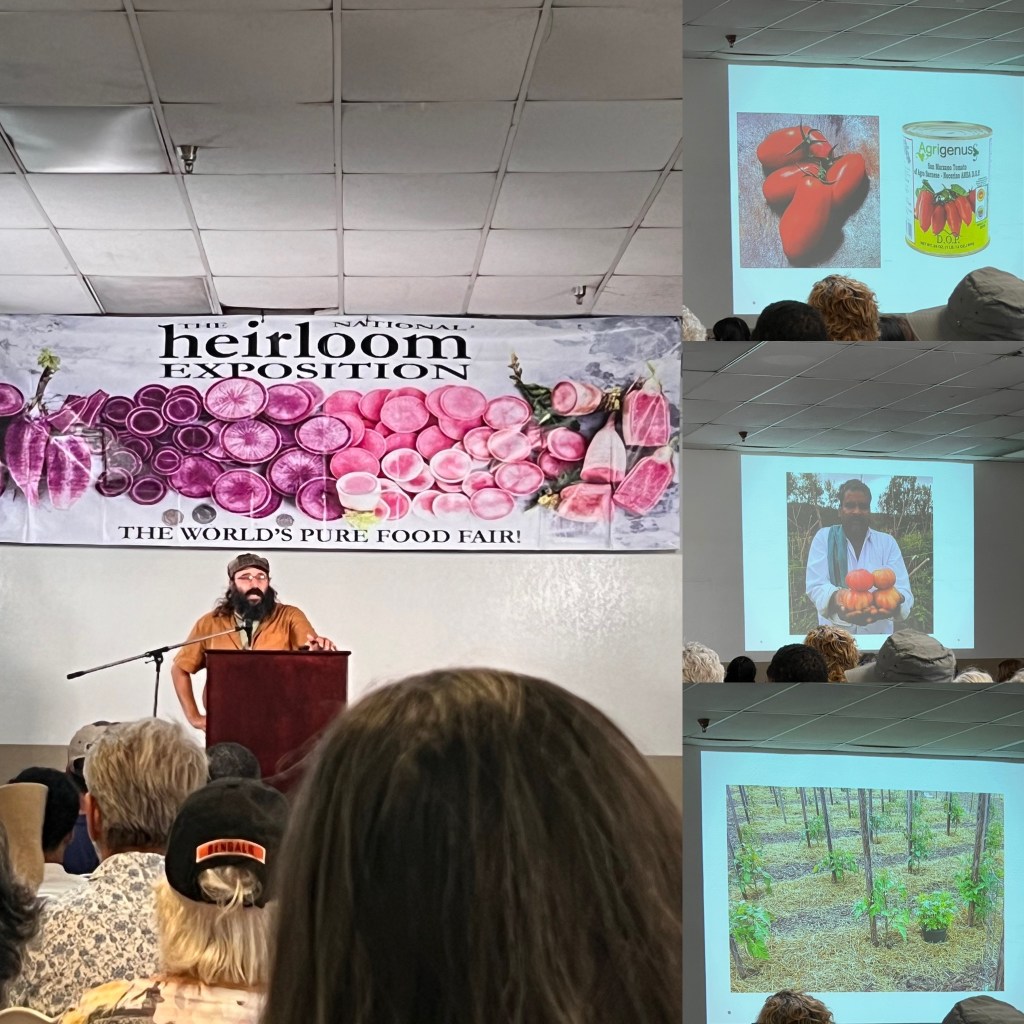
Steven Murray from Murray Family Farms is a mainstay at several farmer’s markets in Southern California. I was excited to hear from him because he is local and I have visited one of his farms stores in Bakersfield. What I didn’t know was that he has been slowly transforming the family farm so it can be competitive and remain in business. His lecture, “A Life of Exotic Fruit Around the World,” was mainly about his travels in China, Turkey, Africa, and India, where he tasted many types of fruits and brought back seeds from them. The varieties were eye-opening. Murray has several degrees in agriculture and while working the family business, he has transformed the family business to carry more of these exotic varieties to sell wholesale to restaurants.

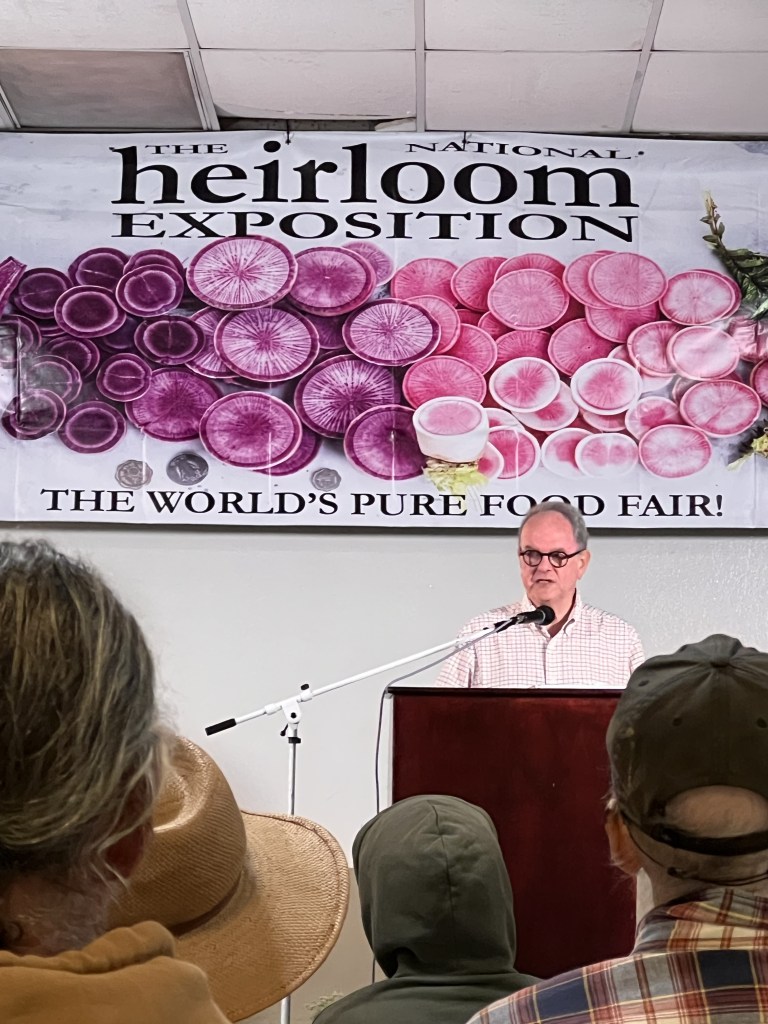
David Shields held lectures on two different nights. His topic was on the “Arc of Taste” and the 10 most desired heirloom grains/vegetables/fruits to next become popular. Shields is chair of the Slow Food Movement’s Arc of Taste in the South and has written several books and is a professor at University of South Carolina. He provided much information concerning the goals of the Slow Food group, to bring past heirlooms into popularity, to ensure a stabile future for the next variety so it will not become extinct. An example of one of these varieties is the Cherokee Purple tomato which has risen in popularity that it is no longer endangered. One of the main factors in preserving these varieties is their strength in flavor. Shields’ lecture provide much information, description of lost varieties and their history and story of their disappearance. Many of these flavors being preserved are done with the assistance of citizen scientists and enthusiasts.
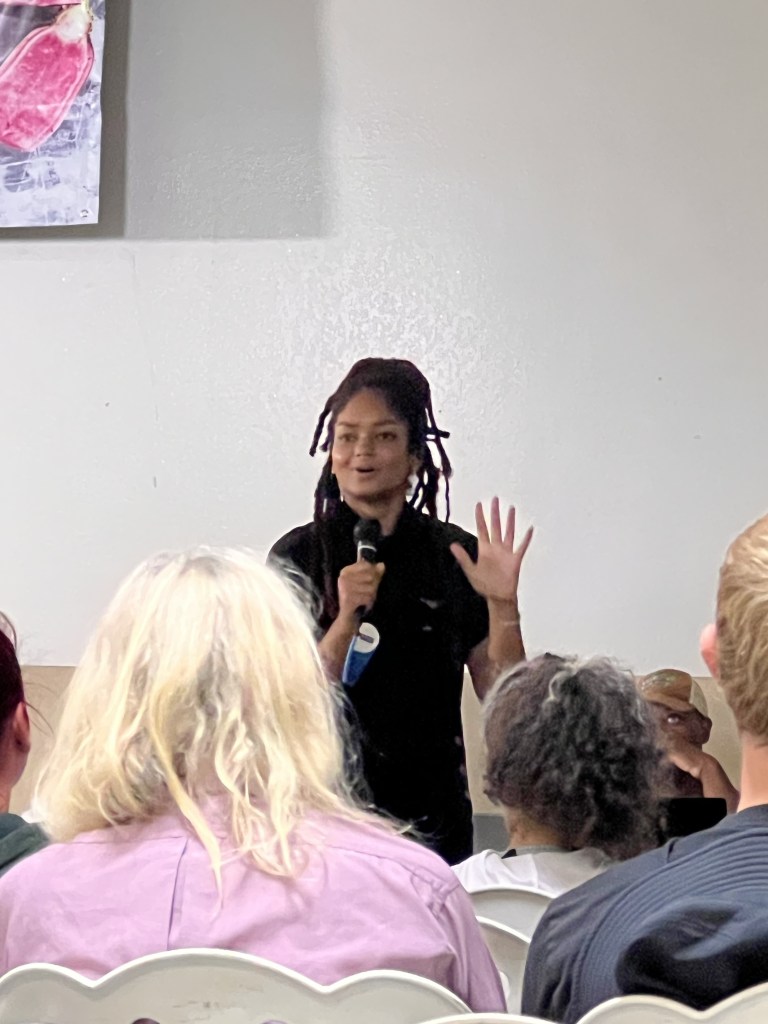
Indy Srinath is one of the youngest and up and coming change makers. Her lecture was titled “Farm Dreams and Food Security” and she eschewed the lecture format and we sat and watched an episode from her National Geographic series “Farm Dreams.” The audience had many questions for her and the night formed into a question and answer format with Srinath’s strengths in being openly honest at how she was able to purchase land at Leimart Park, an area in Los Angeles. She also discussed some of the struggles she had gone through and gave advice on what she would have done differently (trying for land grants instead of purchasing her property with personal assets).
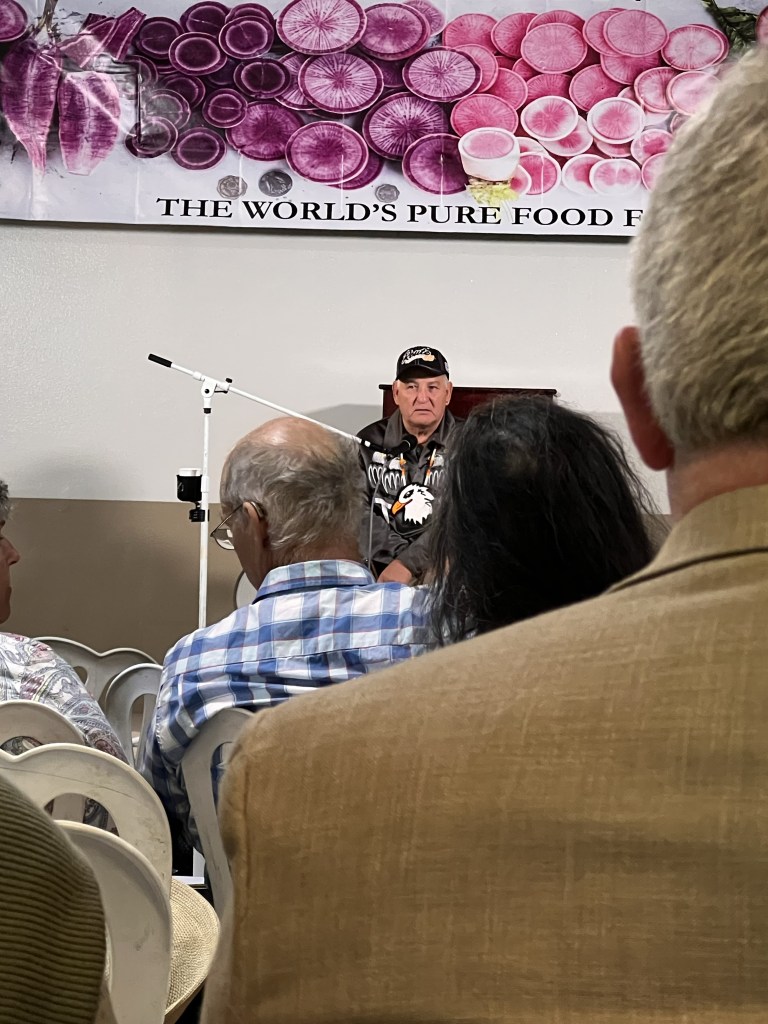
Stephen Silverbear McComber had an interesting subject that I knew I wouldn’t grasp if I read about it: “Seed Keeping and Planting By the Moon.” Filled with anecdotes, jokes, and indigenous culture lessons, McComber described how the moon phases was a part of life, always continuing without a beginning or ending. It was here that McComber mentioned that climate change was something we couldn’t stop but something that we could learn to adapt to.
I have heard of landrace seeds and when I read about its definition, it seems overly simplistic and I questioned my understanding of it. When I saw Joseph Lofthouse, “How to Garden with Less Work and More Joy,” and his subject was on landrace gardening, I knew it was a good opportunity to learn more. Landrace seeds are not heirloom seeds so it would seem to be out of place in an heirloom expo but it’s methods of seed collection is similar to heirloom seed saving. Landrace seeds is the culling of the seeds from the strongest of plants and allowing your plants to cross-pollinate. By saving the seeds from the plants that survived during the worst conditions, the seeds became stronger and through his own experimentations, he has been able to be a successful gardener in the high elevations of Utah. He would not save the seeds from plants that did not taste good and continues to grow tasty vegetables and fruits.

While many of these speakers sold books or had a booth at the vendor section, I did not feel that they were up on stage to sell anything but to provide their wisdom. There were some moments where the speaker would mention an aside and I would have an “oh” moment where it explained something that I observed happening with my garden.
Some of the things I learned about the lectures and heirlooms is that most often, the entire plant from leaf to fruit is eaten. Heirloom seeds, if saved year after year in your region, builds an intrinsic strength of adaptation. And most importantly, the possibilities for seeds to build a resiliency in the fight with climate change is one of the most positive things I have heard. I left the expo feeling that I attended gardening school for three days and could think of very few places I could be exposed to all of these thoughts in one place.
 635 Gardening
[…] see my post on the 10th National Heirloom Expo , specifically the section on David Shields, a member of the Slow Food movement and the “Ark […]
LikeLike